
1. Palazzo D’Avalos
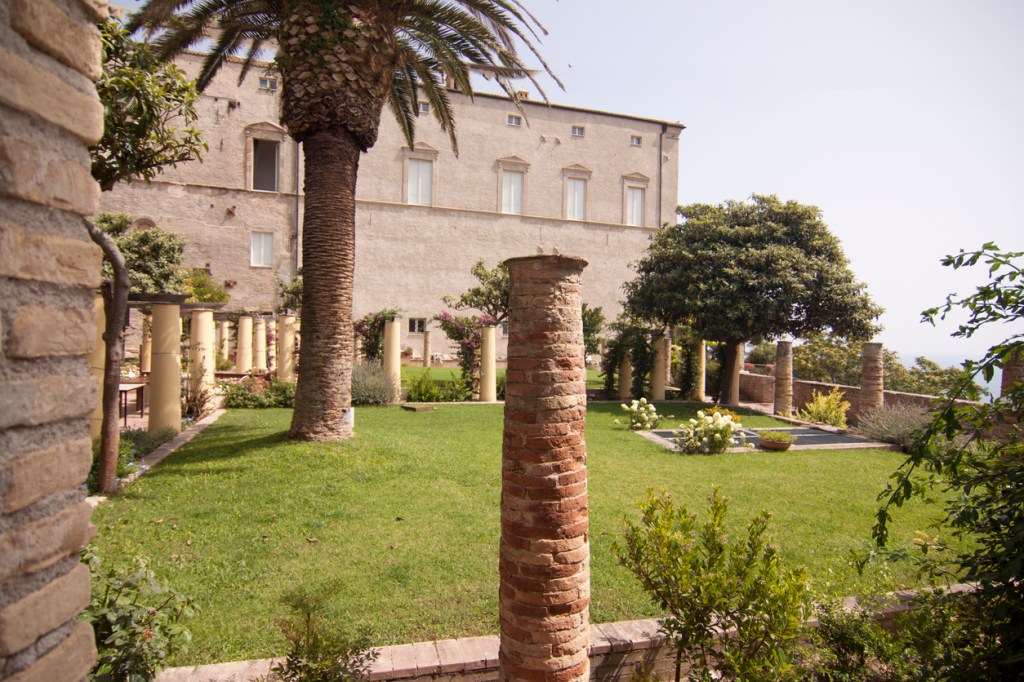
Palazzo D’Avalos is a monumental palace located on Piazza Lucio Pudente, in the historic center of Vasto, region of Marche, Italy. Until 1806, the residence of the Marquises of Vasto, it now houses three civic museums: the Archaeological Museum, the Pinacoteca (Art gallery), and the Costume Museum.
History and Description
The present Renaissance-style square block, with a large internal courtyard, rises just south-east of the Town Cathedral.
Construction of this palace began being built atop or including a 15th-century structure, possibly a Benedictine monastery purchased in 1427 by the condotierro Giacomo Caldora, then lord of the town. In 1456, the palace was damaged by an earthquake. By 1496, the Spanish aristocratic family of d’Avalos, became lords of the town, and preferred to refurbish this palace instead of living in the city castle. By 1552, the second Marquis of the family, Francesco Ferdinando, began refurbishement. The area in this century had suffered depredation by Ottoman Corsairs such as Piyale Pascià. Again in 1573, a portion of the palace was granted by Isabella Gonzaga, widow of the marchese Francesco Ferdinando, to the quando Università di Vasto. The refurbishment of the palace and general area was promoted by Cardinal Innico d’Avalos d’Aragona, brother of Francesco Ferdinando. Designs have been attributed to a local Franciscan monk, Valerio de Sanctis and work was generally complete of the facade on the piazza by the end of the 16th-century.
In the 17th-century, a fountain was commissioned in front by Cesare Michelangelo d’Avalos, In addition, a theater and grand staircase added. Because this Cesaro had allied himself with the Austrian Imperial forces during the War of Spanish Succession, he was exiled from Vasto from 1701 to 1713, and the palace was sacked. By the time of the Napoleonic invasions, the d’Avalos relocated to Naples. Much of the interiors by the early 1800s had been removed. The theater continued to screen works until 1832, when a work was given in honor of the King of Naples, Ferdinando II Bourbon. The commune purchased the palace in 1974.
Collections
The museo archeologico was moved ere from the former convent of San Francesco, in 1989–1998. Among its collections are included many Roman artifacts.
The museo del costume antico was open in 1995 and has vestments dating from the 19th-century, including a hand carriage.
The Pinacoteca collection was initially started with a donation in 1898 by the brothers Giuseppe, Filippo, Nicola e Francesco Paolo Palizzi and others. It was reopened in 1999. It includes works of Filippo Palizzi, Francesco Paolo Michetti, Gabriele Smargiassi, and Giulio Aristide Santoro. There is now a gallery of Arte Contemporanea with a nucleus formed by the donation of the Paglione-Olivares family, including works by the Italian artists Bonichi, Carmassi, De Stefano, Falconi and the Spaniards Mensa, Orellana, Ortega, Quetglas.
2. Castello Caldoresco
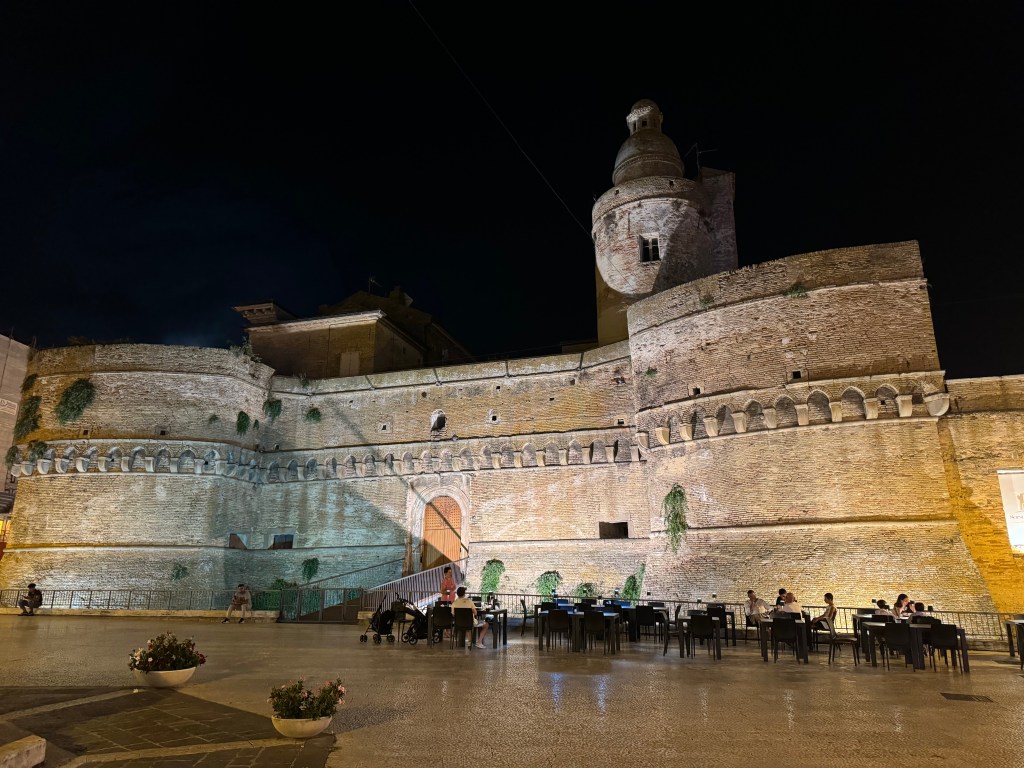
Is a Renaissance castle in Vasto. It is a private property and therefore is not open to the public.
It was built in the early 15th century by the then-lord of the city, Jacopo Caldora, starting from a pre-existing large tower (which in turn dated to the 14th-15th centuries). Later it was modified and restored by Innico d’Avalos d’Aragona.
The castle is located on a promontory overlooking the Adriatic Sea coast. It includes four buildings connected, within a square courtyard inside. Three of the four corners features a cylindrical tower, while the bastions visible in some parts are among the oldest features.
3. San Maria Maggiore
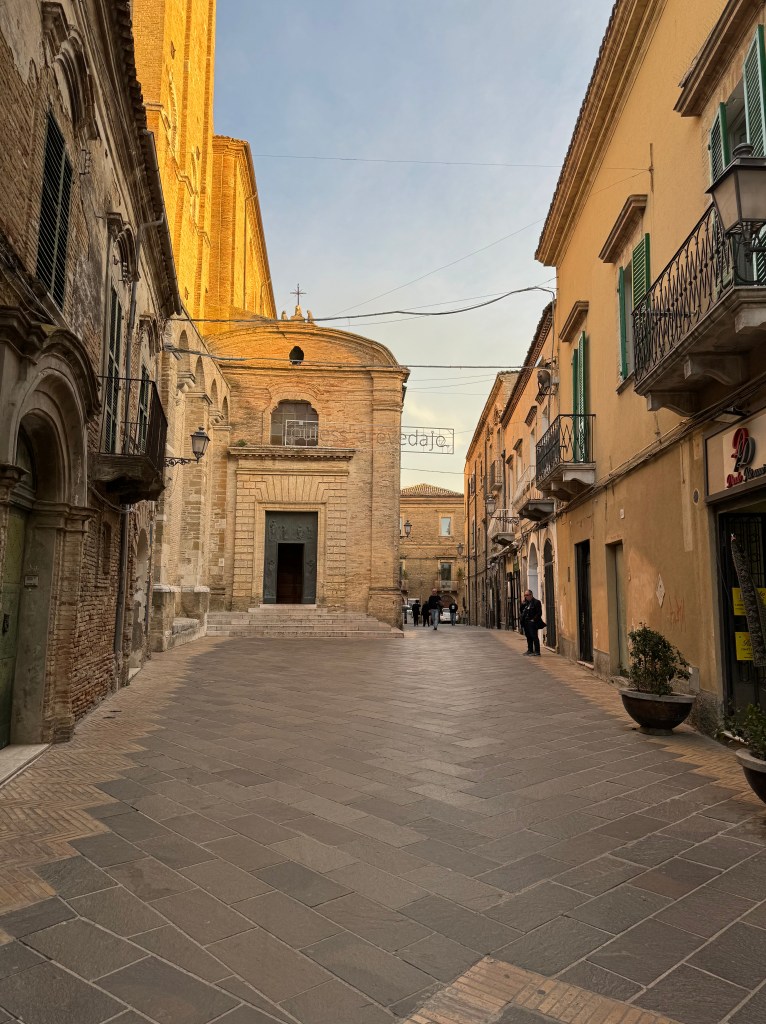
A Roman Catholic parish church located on via Santa Maria in the historic district of Vasto.
History and description
Putatively, the first mention of this church is in a 5th-century letter by Pope Gregory the Great, who speaks of a church dedicated to Sant’Eleuterio, identified with this church and subservient to the diocese of Chieti. However, documentary evidence dates only to 1195 in a document from Henry VI Hohenstaufen, Holy Roman Emperor sent to Odorisio, the abbot of the Benedictine monastery of the San Giovanni in Venere Abbey in Fossacesia, confirming that abbeys possession of the church of Sacte Marie in Guastoaymonis. There was apparently a burst of construction in the 13th and 14th century, including rebuilding a tall bell-tower, which also served as a defensive fortification, in what was an Adriatic town prone to Saracen raids.
The church would suffer a number of environmental and human depredations. On August 1, 1566, the Ottoman admiral Piali Pasha, sacked the town and burned all the churches. Some repairs were performed, but in June 14–15, 1645, the church again burned down. Most of the present structure thus derives from after this date. The belltower was completed in 1730. Much of the decoration was subsidized by the Marquis d’Avalos, lord of Vasto.
In the church are tombs for Nicola Alfonso Viti, Bernardino Carnefresca, Venceslao Mayo, and members of the ‘Avalos family: Alfonso and Diego I. The crypt holds in a glass case relics (bones and blood) of the first (or 4th) century Christian martyr, St Cesario, donated by don Cesare Michelangelo d’Avalos. His skeleton holds a silver palm leaf symbolizing his martyrdom. The attributes of a soldier, helmet and sword, are on the floor of the case beside him. Relics comprising more than one person, all putatively attributed to Cesario, are found throughout Europe.
In the Capella della Spina there is putatively a spine from the crown of thorns worn by Christ. This relic was donated by Pope Pius IV (1499 – 1565) to Francesco Ferdinando d’Avalos, a prominent commander and statesman in the employ of the Hapsburgs of Spain. The chapel is at the end of the right nave and was designed in 1890 by Roberto Benedetti. It was refurbished in 1921 and redecorated in 1933. The polychrome marble niche holding the reliquary was commissioned in 1647 by Diego d’Avalos.
4. Vasto Cathedral
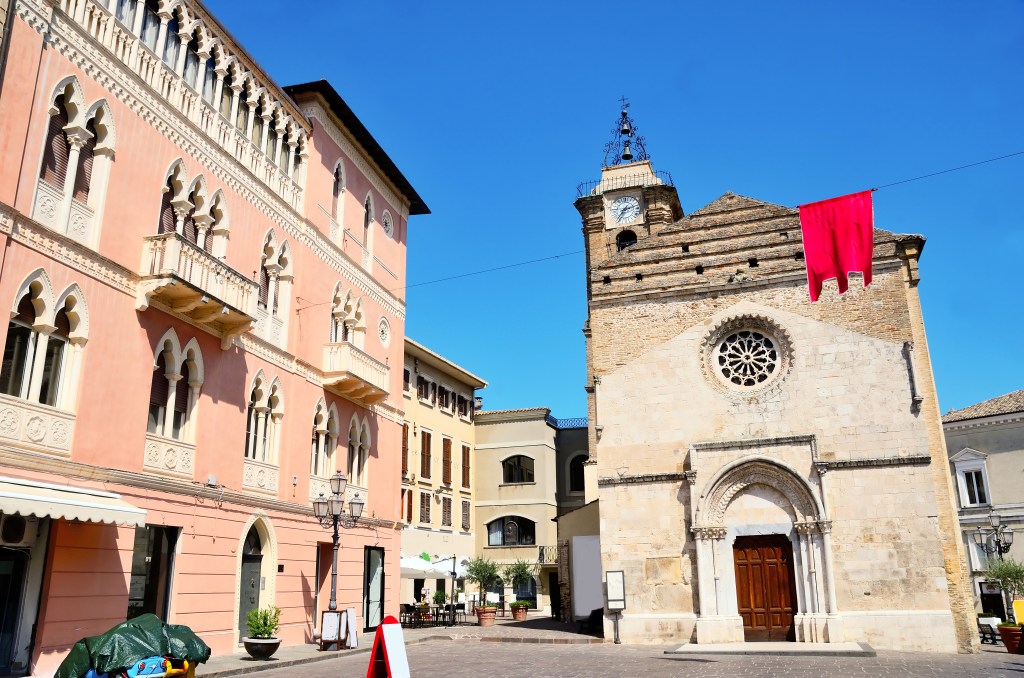
A Roman Catholic cathedral in Vasto, Abruzzo, Italy, dedicated to Saint Joseph. Formerly the episcopal seat of the Diocese of Vasto, it is now a co-cathedral in the Archdiocese of Chieti-Vasto.
History
Vasto Cathedral was built some time during the 13th century as St. Augustine, but it was soon changed to its current name. It was dedicated as a cathedral by then-Pope Pius IX in 1853, but demoted to co-cathedral in 1986.
5. Punta Penna Lighthouse
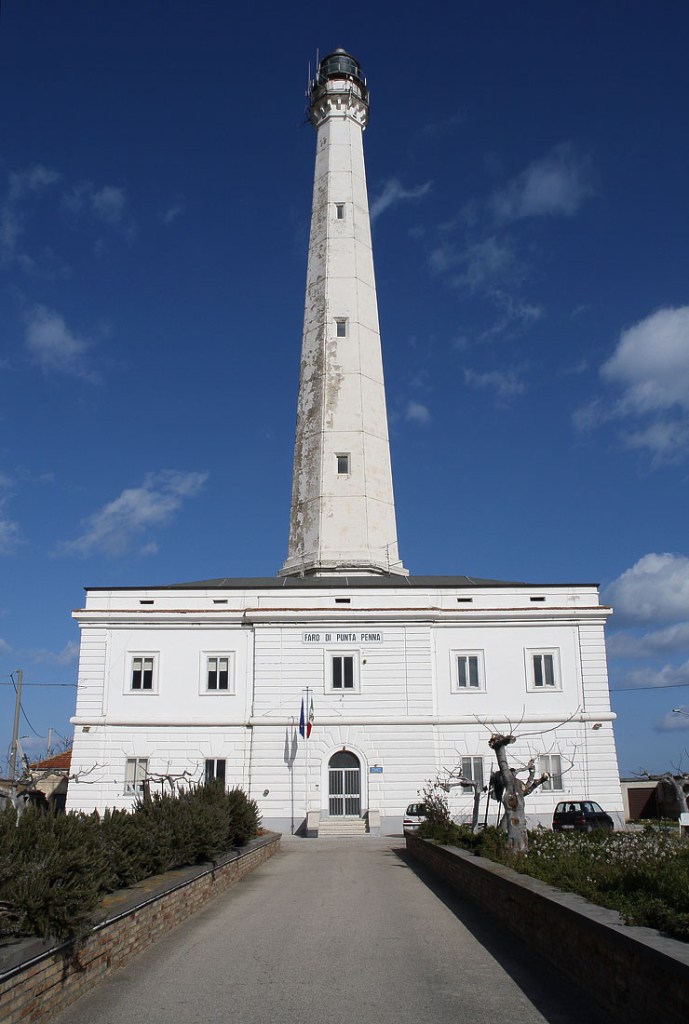
An active lighthouse with a height of 70 metres (230 ft) it is the eighth tallest “traditional lighthouse” in the world, and the second tallest lighthouse in Italy after the Lantern of Genoa. It is located on strategically important spot in Via Madonna della Penna at the port of Vasto.
History
Built in 1906, it has repeatedly been the subject of reconstruction. In 1944, the retreating German army destroyed part of the old lighthouse and it was demolished. Reconstruction started in 1946 to the design of architect Olindo Tarcione; it reopened on 2 May 1948.
The lighthouse is unusual as it looks like a regular brick building with a two-story base which provided housing for the light keeper family and also houses some administrative offices.
A spiral staircase of 307 steps leads up to the summit.
6. Riserva Naturale di Punta Aderci
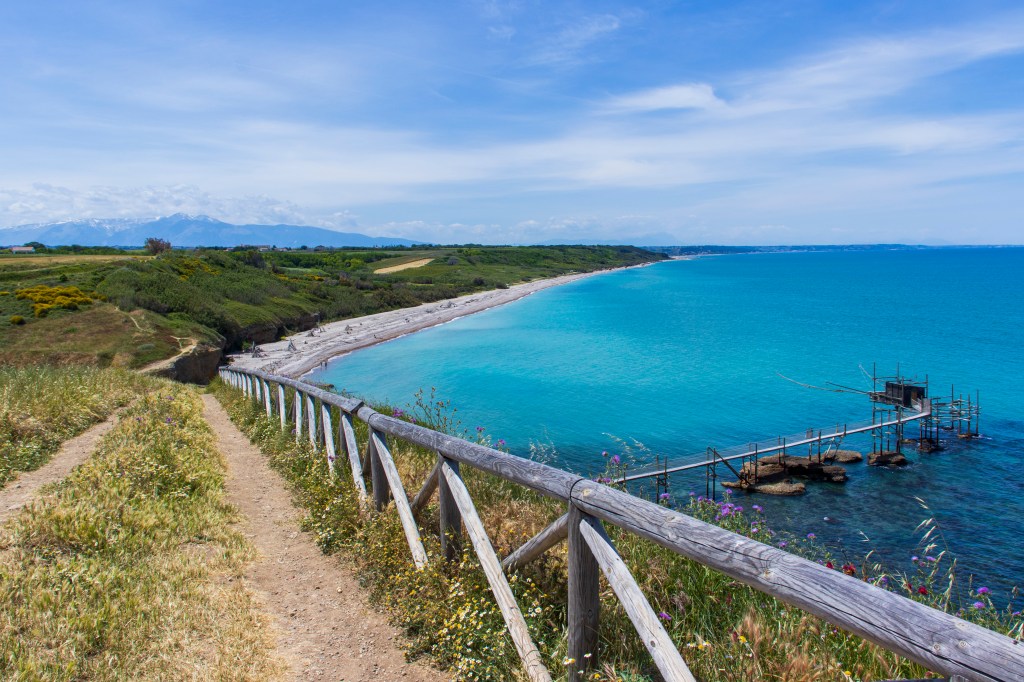
A specially protected nature reserve whose beaches were voted in 2014 third of the top 20 beaches in Italy. Celebrated pebble beach in a nature reserve, surrounded by cliffs with panoramic views of the sea.
7. Loggia Amblingh
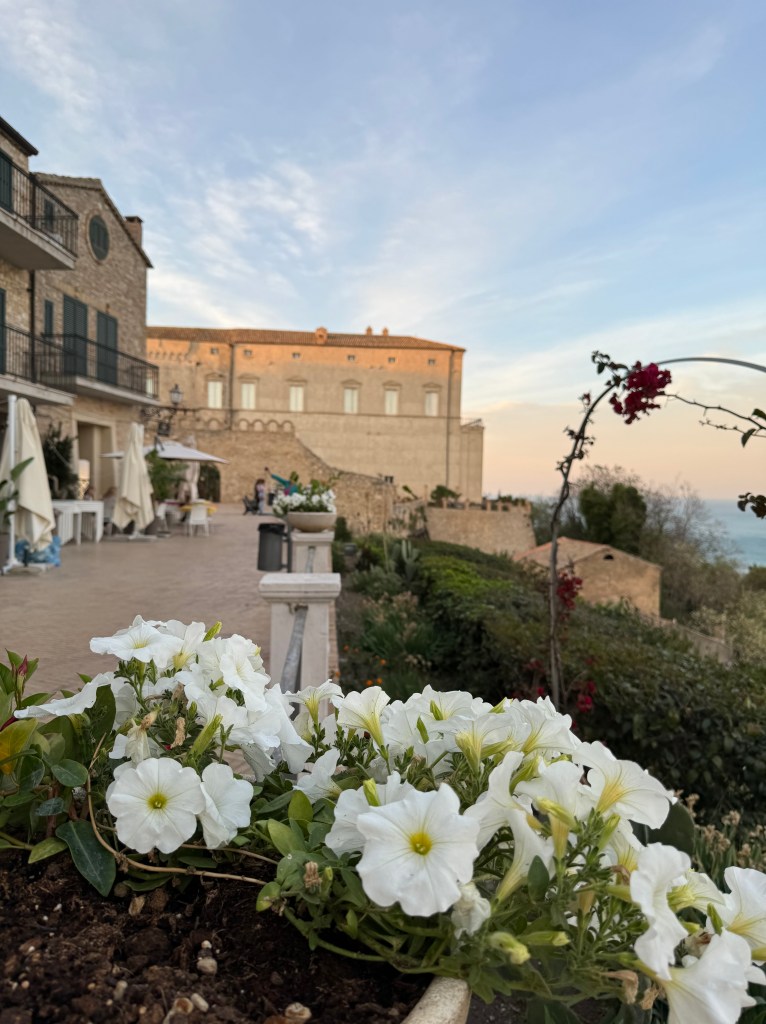
Named after the secretary of Palazzo d’Avalos Guglielmo Amblingh, it is the panoramic walk of the Santa Maria Maggiore district, which includes the stretch of the walls with tower houses, including Casa Rossetti, the descent to Fonte Jovine, the chapel of the Madonna della Catena, and the entrance to the district from Porta Santa Maria. The loggia is broken by the retaining wall of the garden of Palazzo d’Avalos, which forces you to go back up towards Piazza Pudente, while at the other end you go back up to Piazza Cavour.
8. Piazza Gabriele Rossetti
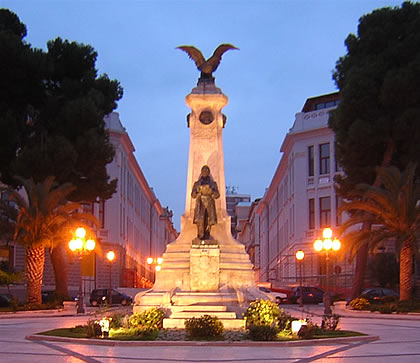
In the area of the ancient Roman amphitheater of Histonium , was created in 1924 approximately, since before it was only a dirt widening for the market. It has a semi-elliptical appearance, following the shapes of the amphitheater, with the monument to the poet Rossetti in the center, surrounded by four large palm trees. The houses of the Santa Maria Maggiore neighborhood, the Palazzo Palmieri, the church of San Francesco di Paola, and the access, to the south, to Corso Italia overlook the square.
9. Bassano Tower
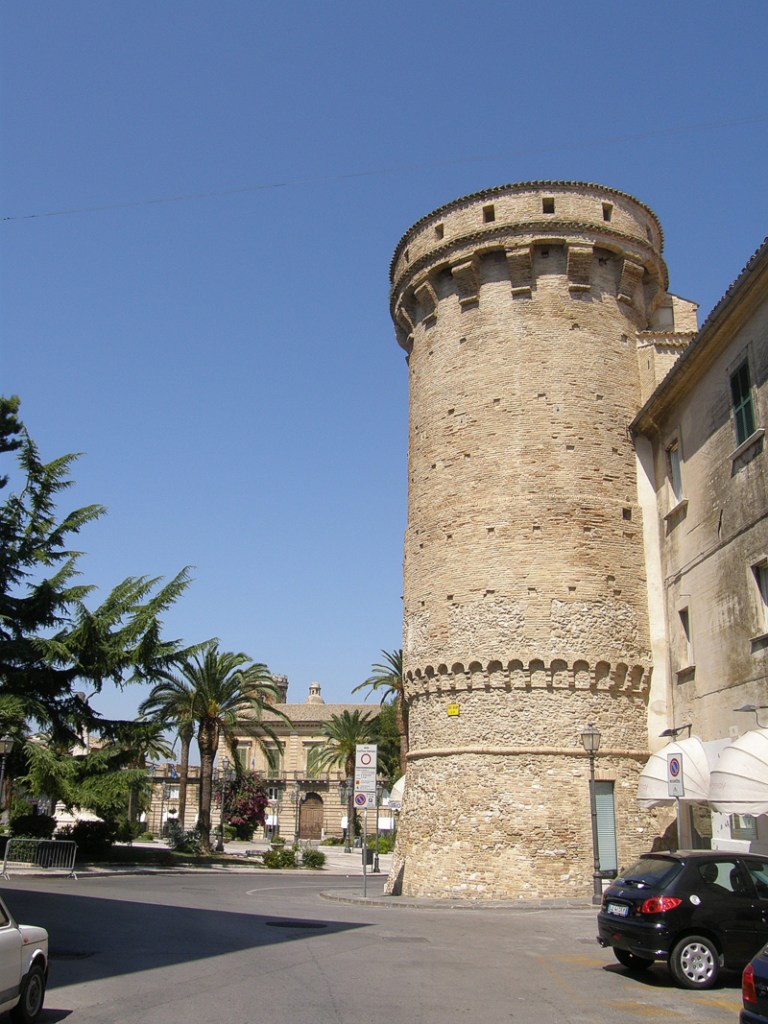
Located in Piazza Rossetti, it is the best preserved tower of the Vasto city walls, commissioned by Jacopo Caldora in 1439, and then administered by various other families. It has four apartments, the stone with the coat of arms of the royal arms, the coat of arms of the University, is fixed in it, on the first floor it includes a series of small arches that take the form of protruding battlements that produce a swelling of the external diameter of the cylinder, with arched brackets, but less accentuated than in the bastions of the Caldora Castle. On the upper floor the construction narrows and appears rounded off like an oval, to finally continue in a cylindrical shape. The final pine tree is decorated by a protruding bastion, the parapet of which is supported by large brackets connected with semi-oval arches with a soft curvature. The tower belonged to the d’Avalos in 1500, then it passed to the Bassano family, an ancient family of Padua . In 1814 the telegraph was placed at the top of the tower.
Copyright Wikipedia – under a Creative Common License
 VASTO TOURS